

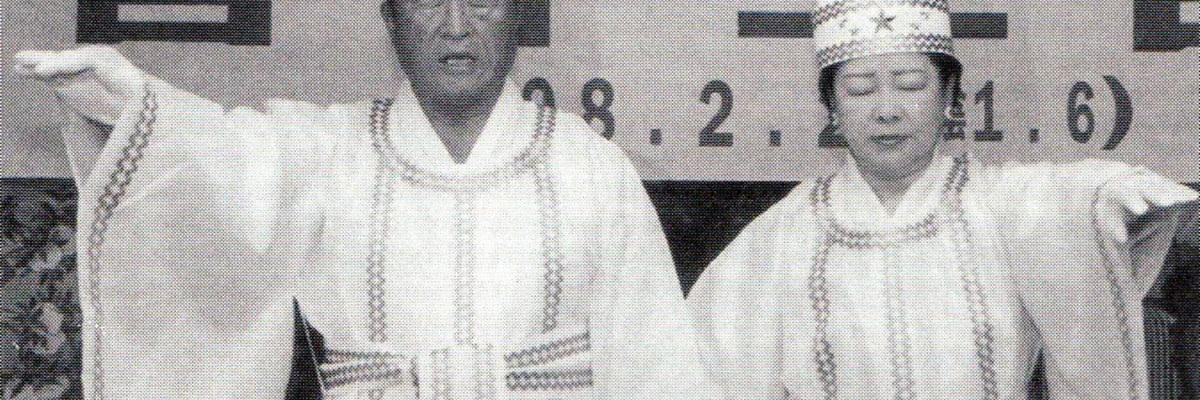
Under usual circumstances, the Unification Church, colloquially known as the Moonies, might be characterized as a global religious group with an intricate and controversial past. However, in the aftermath of the shocking assassination of former Japanese Prime Minister Shinzo Abe, this religious organization finds itself thrust back into the global spotlight.
Armed with a homemade gun and a self-reported grudge, the 41-year-old gunman fired two deadly shots before being arrested. Why had he targeted Abe? Likely due to the former politician’s alleged links to the church; Abe had appeared as a paid speaker at multiple church-related events.
Forget the shadowy dealing of the Yakuza, the Moonies is a bizarre world of cult practices and a web of controversies. Let’s unpick the details.
Who are the Moonies?
The inception of the Unification Church dates back to 1954, when Rev. Sun Myung Moon established it in South Korea. Officially named the Family Federation for World Peace and Unification, the organization’s teachings stemmed from Moon’s claim of a vision he received from Jesus Christ at 15. In this vision, he was supposedly directed to complete Christ’s unfinished mission on Earth, ushering humanity into a state of ‘sinless’ purity.
Moon’s staunch anti-communist stance was critical in building relationships with influential conservative politicians worldwide, underpinning the church’s political ethos and driving its global expansion.
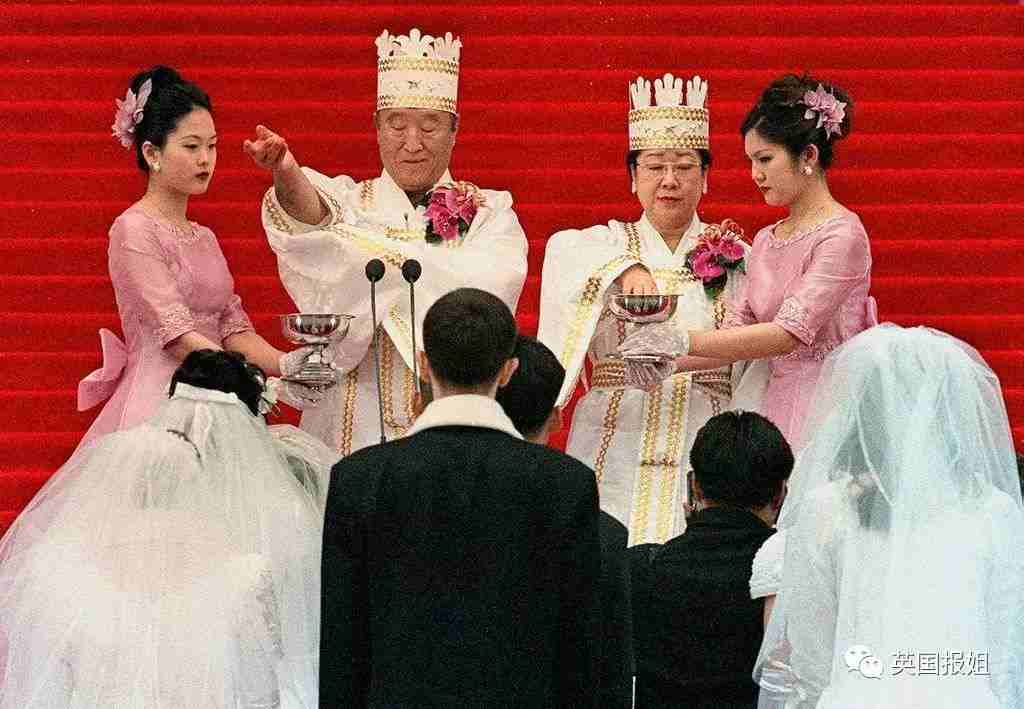
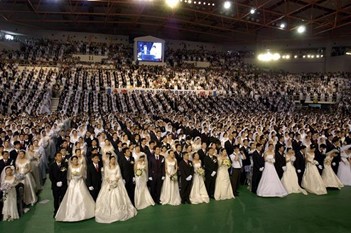
The Unification Church experienced rapid growth throughout the 1950s and 60s, thanks to the dedication of its missionaries. Membership numbers rose from an initial 100 to nearly 10,000 within a few years. By the 1980s, the church claimed a staggering three million followers globally, with significant populations in Japan and the United States. They gained recognition primarily for their mass wedding ceremonies, known as the Holy Marriage Blessing Ceremony. In this ritual, Moonies believed marriage cleansed couples from the sin inherited from humanity’s past and provided any future offspring with a clean moral slate.
If It Looks Like a Cult and Talks Like a Cult
However, along with this expansion came escalating scrutiny. As the organization’s influence broadened, so did the doubts surrounding its business practices and recruiting methods. Critics, which included ex-members of the church, began to liken the organization to a cult, accusing it of manipulative financial techniques, deceptive recruiting tactics, and in some cases, abusive practices.
Among the most vocal critics was Steven Hassan, a cult expert and former Moonie himself, who raised concerns about the Unification Church’s methods. The church also found itself in the legal crosshairs when the US Supreme Court permitted two former members, claiming to have been tricked into joining and donating to the organization in 1989, to seek punitive damages. The plaintiffs settled the lawsuit out of court.
The Unification Church’s anti-communist doctrine allowed it to foster ties with influential conservative figures globally. Notably, these connections included former Japanese Prime Minister Nobuske Kishi and his grandson, the recently assassinated former Prime Minister Shinzo Abe. Abe himself had appeared as a paid speaker at events affiliated with the Unification Church, signaling a continued relationship between the church and influential political figures.
Fast forward to the present, the Church is again under public scrutiny following allegations tied to the tragic assassination of Shinzo Abe. The accused gunman’s mother was found to be a member of the Unification Church. Reports suggest that a substantial donation she made to the church over two decades ago led to the family’s financial ruin, leading her son to harbor a deep grudge, ultimately driving him to assassinate Abe. In the wake of this event, the Church swiftly condemned the assassination, reiterated its commitment to peace and unification, and sought to distance itself from the allegations.
A Cult Following
Today, the precise number of Church members is uncertain, but experts believe it has significantly dwindled since Moon died in 2012, compounded by a subsequent leadership schism within his family. Nevertheless, the Unification Church remains an active entity. There are ongoing reports of individuals who feel they’ve been scammed or coerced by the organization. In Japan, a group of lawyers actively represent former church members and continue to assist individuals who believe the Church has manipulated them.
Despite the reduction in membership, controversies, and legal challenges, the Church has left an indelible mark in the annals of modern religious movements. It serves as a potent example of the interplay between faith, power, and personal agency in the contemporary world.
The Unification Church, or the Moonies, holds a controversial and intriguing place in the tapestry of religious history. Its story continues to unfold with recent events in Japan and ongoing legal battles. The Church’s influence, whether viewed positively or negatively, is sure to endure in the years to come. As with all religious organizations, the task is to navigate the delicate balance between faith and skepticism and to seek understanding amidst the complexity.
Categories: Theology

 MASONIC PHILOSOPHICAL SOCIETY