


Ah, the English Civil War. This rambunctious ruckus, also known as the Great Rebellion or the English Revolution, was a turbulent time of political, social, and religious upheaval. Picture warring factions, rousing rhetoric, and people demanding democracy! Strap in, dear reader, as we embark on an adventure through the tumultuous 17th century!
A Brewing Storm: Tensions Mount
Before we dive headfirst into the chaos, let’s set the stage. The English Civil War unfolded between 1642 and 1660, with the country divided into Royalists (loyal to King Charles I) and Parliamentarians (led by Oliver Cromwell). But how did we get here? A stew of religious, political, and economic discontent bubbled for years, with folks growing increasingly tired of the King’s authoritarian ways.
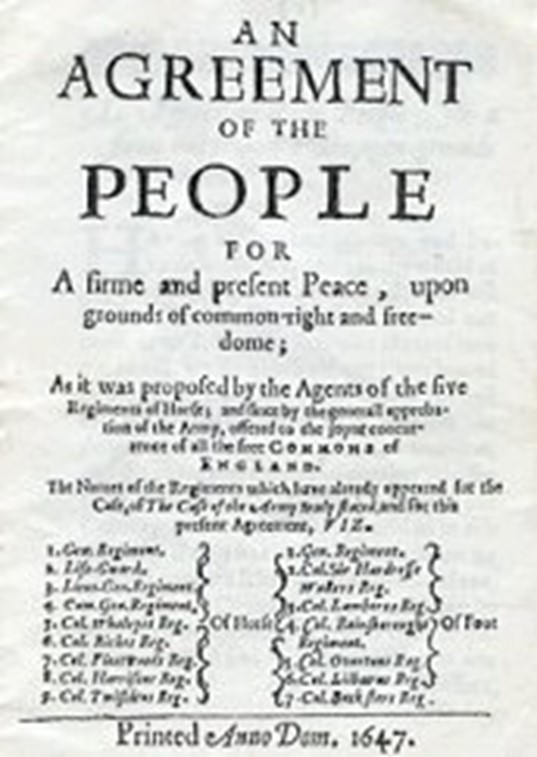
Enter the Levellers: a political movement active through the period, committed to popular sovereignty, extended suffrage, and equality before the law. As an influential bloc within the Parliamentarian faction, they wrote a series of pamphlets, such as An Agreement of the People, which first articulated many democratic principles we take for granted today.
All Hail the Parliamentarians: The War Kicks Off
With tensions simmering, the English Revolution kicked off in 1642. The Parliamentarians sought to reduce the King’s power and establish a more democratic system, while the Royalists aimed to protect the monarchy. It was a classic game of political tug-of-war, with battles, sieges, and conspiracies aplenty.
The war ebbed and flowed, with neither side gaining a definitive upper hand. That is, until the Parliamentarians unleashed their secret weapon: the New Model Army. This ragtag group of fighters was organized, disciplined, and fiercely determined. Under the leadership of Old Ironsides – Oliver Cromwell – they stormed to victory in 1646: marking the end of the First English Civil War.
The King is Dead, Long Live…Who, Exactly?
With the Royalists defeated, the English Revolution entered a new phase. Once the ruler of all he surveyed, King Charles I found himself on trial for treason. Spoiler alert: it didn’t end well for him. In 1649 (after the Second English Civil War), Charles was executed, and the monarchy was abolished.
But with the King gone, the question remained: who would take the reins? Some favored a republic, while others pushed for a more democratic system. Enter the Rump Parliament – a feisty group of radical MPs who stepped in to fill the void. And so, the Commonwealth of England was born, with Oliver Cromwell serving as the Lord Protector – a pseudo-monarchical position that could call a parliament to session.
Democracy, Interrupted: The Protectorate Years
While the English Revolution was rooted in a quest for democracy, the Protectorate years were a bit of a detour. Under Cromwell’s rule, England was transformed into a military dictatorship. He clamped down on entertainment, enforced strict religious laws, and even cancelled Christmas Day (by 1656, soldiers patrolled the streets hunting down any who dared enjoy a Christmas feast).
Despite the somber atmosphere, the seeds of democracy continued to sprout. The Levellers continued pushing for more democratic rights, even under Cromwell’s iron-fisted rule. Unfortunately, their dreams of a more just society would have to wait.
The Comeback Kid: Monarchy Returns
In 1660, following Cromwell’s death and a brief period of chaos, the monarchy was restored. King Charles II, son of the executed Charles I, took the throne in what became known as the Restoration. This marked the end of the English Revolution and a return to (somewhat) more familiar territory.

But while the monarchy was back in business, things had changed. The revolution left a lasting impression on the nation, and the idea of democracy was firmly implanted in the people’s minds. The restored monarchy was more cautious, and the power dynamics between the King and Parliament shifted significantly. In a way, the English Revolution set the stage for the development of modern parliamentary democracy.
The Legacy: An Unfinished Revolution
The effects of the English Revolution on our society are rather complex. While it didn’t fully realize the dream of a democratic society, the revolution did foster a more balanced dynamic between the monarchy and Parliament. The Levellers’ aspirations for a more democratic and equitable society didn’t fade away; instead, they inspired future generations. As time passed, we gradually broadened voting rights and laid the groundwork for the modern democratic structure.
The English Revolution was a tumultuous journey filled with unexpected twists, dramatic changes, intense battles, and fervent convictions. Even though it didn’t accomplish all of its goals, the revolution played an essential part in molding the democratic values we hold dear today.
So, the next time you exercise your right to vote or admire the functioning of parliamentary democracy, take a moment to remember the Levellers, the Parliamentarians, and the New Model Army. They might have been the trailblazers of their era, but their legacy endures and continues to influence the democratic world we inhabit today.
References:
https://www.newstatesman.com/long-reads/2018/06/english-revolution
https://link.springer.com/chapter/10.1007/978-3-031-15780-6_3
Categories: History

 MASONIC PHILOSOPHICAL SOCIETY
Interesting artice. Thanks
LikeLike